The Happy Dance: Your Brain's Secret Weapon For Instant Joy
Have you ever felt so thrilled, relieved, or over the moon that your body just had to move? That spontaneous, wiggly, maybe-even-awkward burst of movement we call a happy dance? It’s a universal language of joy, a physical punctuation mark for life’s best moments. But what if we told you this simple, instinctual act is more than just a fun reaction? It’s a powerful, scientifically-backed tool for boosting your mood, reducing stress, and rewiring your brain for happiness. This article dives deep into the joyful jiggle, exploring the psychology, the physiology, and the pure, unadulterated power of letting your happiness move you.
What Exactly Is a Happy Dance? More Than Just Wiggle-Waggle
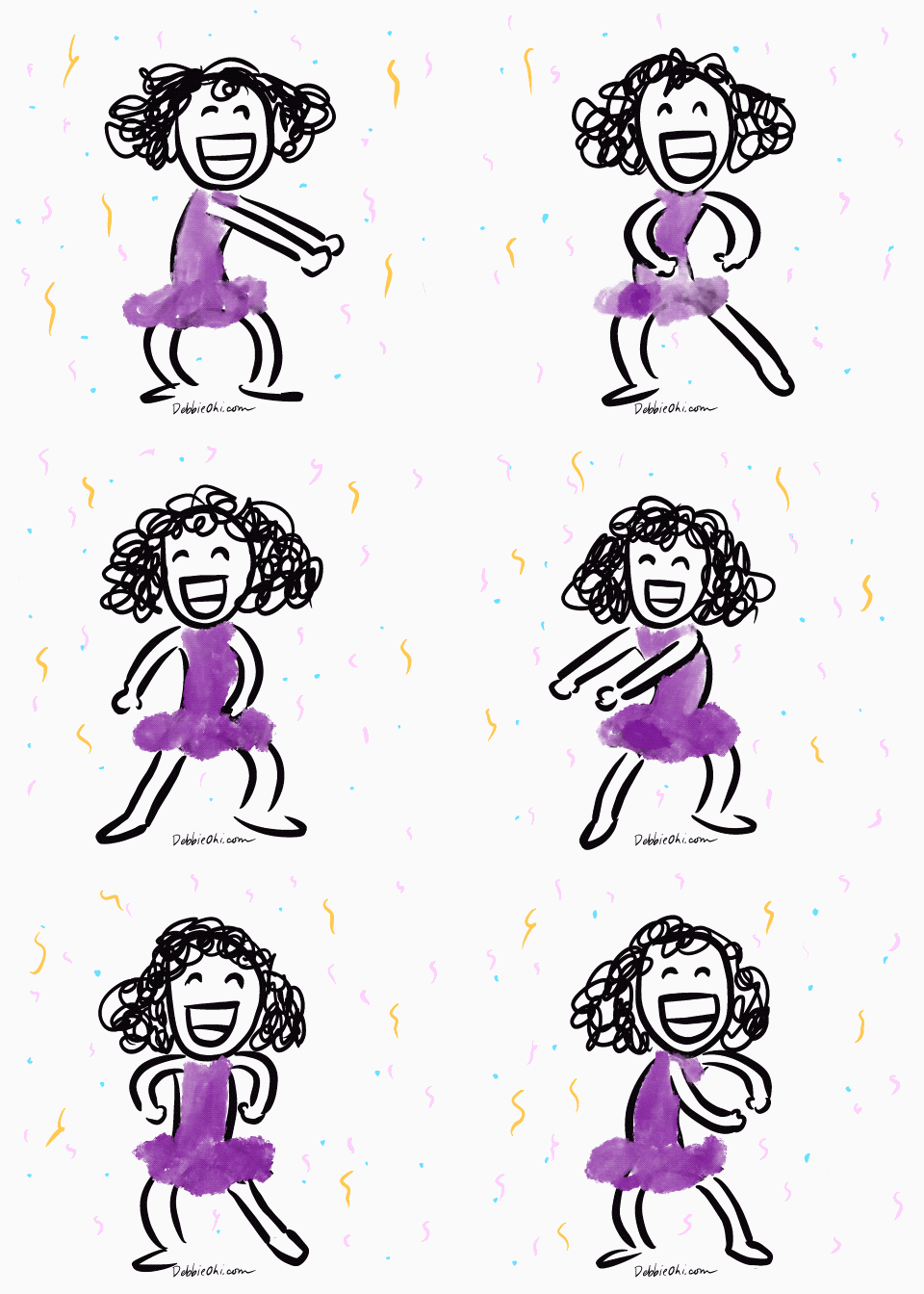
Before we get into the "why" and "how," let's define our star. A happy dance is an uninhibited, spontaneous physical expression of positive emotion. It’s not a choreographed routine from a musical; it’s the fist pump after acing a test, the shoulder shimmy when your favorite song comes on, or the full-body wiggle when you get good news. It’s kinesthetic euphoria—joy made visible.
The Key Characteristics of a True Happy Dance
What separates a genuine happy dance from, say, exercise or formal dance? Several key traits:
- Spontaneity: It’s an impulse, not a plan. You don't schedule a happy dance; it happens to you.
- Authenticity: There’s no "right" way. It’s deeply personal and often silly-looking to outsiders. That’s the point.
- Emotional Primacy: The movement is a direct, unfiltered outlet for an internal feeling (joy, relief, pride, excitement).
- Lack of Self-Consciousness: In the moment of the dance, you’re not worried about how you look. The feeling overrides the inner critic.
This isn't about performance. It’s about expression. It’s your body’s native tongue for saying, "I feel amazing right now!"
The Neuroscience of Joy: Why Your Body Craves the Happy Dance
That urge to move when you're happy isn't random. It's a hardwired neurobiological response with a cascade of feel-good chemicals.
The Endorphin and Dopamine Rush
When you experience a positive event or even anticipate one, your brain's reward system lights up. Dopamine, the "motivation molecule," surges, creating that sense of pleasure and wanting to do something. Simultaneously, physical movement—even simple, rhythmic motion—triggers the release of endorphins, the body's natural painkillers and mood elevators. This combination is a potent cocktail for what scientists call "eudaimonic well-being"—a deep sense of flourishing and purpose. The happy dance is your body’s way of capitalizing on this chemical bonanza, amplifying the positive feedback loop.
The Vagus Nerve and the "Social Engagement System"
Here’s a fascinating layer: the vagus nerve. This cranial nerve is a key component of your parasympathetic nervous system (the "rest and digest" system) and is intimately linked to your facial expressions, voice, and heart rate. Genuine, spontaneous expressions of joy like a happy dance stimulate the vagus nerve, which can:
- Lower your heart rate.
- Promote a sense of calm and safety.
- Enhance social connection (more on that soon).
Essentially, doing a happy dance sends a signal to your entire nervous system: "We are safe, we are happy, we can connect."
Movement as Emotional Regulation
From a psychological perspective, embodied cognition theory suggests that our physical states directly influence our mental states. You don't just feel happy and then dance; the act of moving your body in an expansive, energetic way can actually generate and intensify the feeling of happiness. It’s a two-way street. By choosing to move (even if you have to "fake it" at first), you can trick your brain into producing more positive neurochemistry. This makes the happy dance a powerful, accessible form of self-soothing and emotional regulation.
The Social Superpower: How Your Happy Dance Connects You to Others
Humans are social creatures, and our expressions of emotion are fundamental to bonding. A happy dance is a highly visible, non-verbal signal of positive affect that serves crucial social functions.
It’s Contagious (In the Best Way)
Have you ever seen someone else's genuine, goofy happy dance and found yourself smiling or even mimicking the movement? That’s emotional contagion, and it’s a real phenomenon. When we witness authentic joy expressed physically, mirror neurons in our brain fire as if we are experiencing it ourselves. Your spontaneous wiggle doesn't just make you feel good; it has the ripple effect of elevating the mood of everyone around you. It’s a gift of shared positivity.
It Communicates Trust and Safety
In social psychology, open, non-defensive body language signals trust and a lack of threat. A happy dance is the ultimate expression of this. By dropping your guard and moving freely, you subconsciously communicate: "I am safe, I am not a threat, and I welcome connection." This can break down social barriers in group settings, from an office celebrating a win to a crowd at a concert.
It Builds Shared Identity and Memory
Groups that engage in synchronized or parallel movement—think of fans doing "the wave" or a team celebrating a goal with a group dance—report stronger feelings of unity and belonging. Your personal happy dance, when witnessed by friends or family, becomes part of your shared narrative. "Remember when you did that crazy dance when..." These stories, anchored in physical joy, strengthen social bonds and create a reservoir of positive shared memories.
From toddlers to TikTok: The Happy Dance in Culture and Media
The happy dance is so fundamental it transcends age, culture, and even species (watch a dog after a walk!). Its presence in media underscores its deep resonance.
The Digital Age of the Happy Dance
Social media platforms, particularly TikTok and Instagram Reels, have created a global stage for the happy dance. Challenges like the "Renegade" or the "Savage" dance often start as pure, joyful expressions before becoming viral. But the core remains: people sharing their unique, often homemade, expressions of glee. This digital curation has two effects: it normalizes spontaneous joy-expression and provides a vast library of movement inspiration. You can literally learn a "happy dance vocabulary" from creators worldwide.
Iconic Happy Dances in Pop Culture
Some happy dances become legendary, embedded in our collective consciousness:
- Cartoon Characters: From SpongeBob SquarePants' frantic, joyful jig to Mickey Mouse's classic toe-tap, animation exaggerates the happy dance to its purest, most hilarious form.
- Film & TV: Think of Ferris Bueller's parade rendition of "Twist and Shout" or Judy Garland's heartfelt skip in "The Wizard of Oz." These moments are cinematic shorthand for unbridled happiness.
- Sports Celebrations: Every athlete has one—the Usain Bolt "lightning bolt" pose, the Michael Jordan fist pump, the soccer player's knee slide. These are professional, polished happy dances that still capture that raw, victorious release.
These cultural touchstones validate the happy dance as a legitimate and powerful form of human expression.
How to Cultivate Your Own Happy Dance: A Practical Guide
Maybe you feel you've "lost touch" with your spontaneous mover. The good news? The happy dance is a skill you can relearn and cultivate. It’s about giving yourself permission and creating opportunities.
Step 1: Create a "Joy Playlist"
Music is the most common catalyst for a happy dance. Curate a playlist of songs that physically make you want to move. This isn't about what's cool; it's about what triggers your joy. It could be a 90s pop anthem, a show tune, or a driving electronic beat. Have it ready on your phone. When you need a boost, press play and commit to moving for one full song. No mirrors, no audience required.
Step 2: Lower the Stakes with "Solo Sessions"
The fear of being judged is the biggest happy dance killer. Designate private time. Dance while cooking breakfast. Have a five-minute "wiggle break" in your home office. The goal is to decouple movement from performance. Remind yourself: this is for you, not for an audience. Start small—just nod your head, tap your foot. Let it build.
Step 3: Use Movement as a Mood Anchor
Don't wait for joy to happen to you. Use the happy dance to create joy. Set a timer for 2-3 minutes. Stand up. Put on an upbeat track. And just. Move. Shake out your limbs. Jump. Spin. Even if you feel silly or don't "feel" happy initially, keep going. You are biochemically hacking your mood. After the session, check in. You’ll likely feel lighter, more energized, and yes—happier.
Step 4: Embrace the "Awkward" and "Uncoordinated"
Your happy dance doesn't need to be graceful. In fact, the more authentically you it is, the better. Is it a stiff shoulder shimmy? A two-step? A wild arm wave? Own it. The moment you judge your movement ("I look ridiculous"), you shut down the spontaneous, joyful flow. The goal is expression, not elegance.
Debunking Happy Dance Myths: It’s Not What You Think
Several misconceptions hold people back from embracing their inner happy dancer.
Myth 1: "I'm too old/uncoordinated/not a 'dancer'."
Truth: The happy dance has no age limit or skill requirement. It is the antithesis of formal dance. It’s about kinesthetic authenticity, not technique. A joyful, flailing arm wave from a 70-year-old is infinitely more powerful and genuine than a technically perfect but emotionally sterile routine from a pro.
Myth 2: "It's childish or unprofessional."
Truth: While you probably shouldn't break into a full wiggle during a serious board meeting, the principles apply. A subtle, personal happy dance—a fist pump under the desk, a quiet celebratory shoulder roll after a successful client call—is a professional emotional regulation tool. It releases tension and resets your focus. The awareness that we all have this joyful impulse is humanizing, not childish.
Myth 3: "I have to be extremely happy to do it."
Truth: You can use the happy dance to generate moderate happiness or to shift from a neutral or low state. The act of choosing to move joyfully is an intervention. It’s like starting a campfire; you need a spark (a small positive thought or a great song), but the act of tending the fire (the movement) keeps it going and makes it bigger.
The Happy Dance as a Daily Micro-Habit for Lifelong Well-being
Integrating micro-moments of spontaneous joy into your routine isn't frivolous; it's a profound act of self-care and resilience.
Building a "Positivity Portfolio"
Positive psychology researcher Barbara Fredrickson talks about the "broaden-and-build" theory. Positive emotions like joy (which the happy dance embodies) broaden our moment-to-moment thinking and open us to new possibilities. Over time, these broadened moments build our enduring personal resources—physical, intellectual, social, and psychological. Each happy dance is a tiny deposit into your "positivity portfolio," making you more resilient, creative, and connected over the long term.
Combating Modern Stress and Screen Fatigue
We live in a world of chronic, low-grade stress and hours of sedentary screen time. The happy dance is the perfect antidote. It’s:
- A Physical Reset: It gets blood flowing, releases muscle tension.
- A Mental Break: It forces you into the present moment and out of ruminative or anxious thought loops.
- A Joy Injection: It’s a deliberate, quick, and free way to inject a dose of positive neurochemistry into your system.
Think of it as a micro-vacation for your nervous system.
Your Invitation to the Global Joy Movement
The happy dance is yours. It is a birthright of expression, a biological gift, and a social superpower. It requires no equipment, no classes, and no permission slip (though giving yourself permission is key).
So, the next time you hear that one song, get that great piece of news, or simply feel a surge of gratitude for a sunny day—don't just feel it. Move it. Let your body speak the language of joy. Start small. Be silly. Be you. In a world that often takes itself very seriously, your happy dance is a radical act of hope, a physical declaration that joy is here, now, and worth celebrating.
What will your happy dance look like today? Find your beat, give yourself permission, and let the music move you—from the inside out. The world needs more people who are brave enough to dance with their joy.
{{meta_keyword}}
Dan's Secret Weapon | DOC

Rediscover the Joy of Play: Why Pappy's Toy Shop is Every Parent’s
Happydance Celebrate GIF - Happydance Happy Dance - Discover & Share GIFs

